Choosing a roofing contractor in Kansas City is not just a price decision. After hail, wind, or a leaking roof, the contractor you hire controls the quality of the inspection, the detail in the written scope, the install crew, the cleanup, the warranty, and the documentation you keep after the job is complete.
That matters in a storm market. When a major hail event hits the metro, homeowners often see new door knockers, out-of-state trucks, vague bids, and pressure to sign quickly. A better process is slower up front and cleaner later: verify the company, compare the scope in writing, and make sure the contractor can explain the work without making insurance promises they are not allowed to make.
Quick Answer
Choose a Kansas City roofing contractor by verifying local presence, insurance, workers’ comp, permits, manufacturer certifications, photo-documented inspections, itemized written scope, warranty terms, production timeline, cleanup plan, and how they handle insurance documentation. Avoid high-pressure storm chasers, vague bids, deductible-waiver offers, and anyone promising claim approval. A legitimate roofer explains construction scope and puts details in writing before you sign.
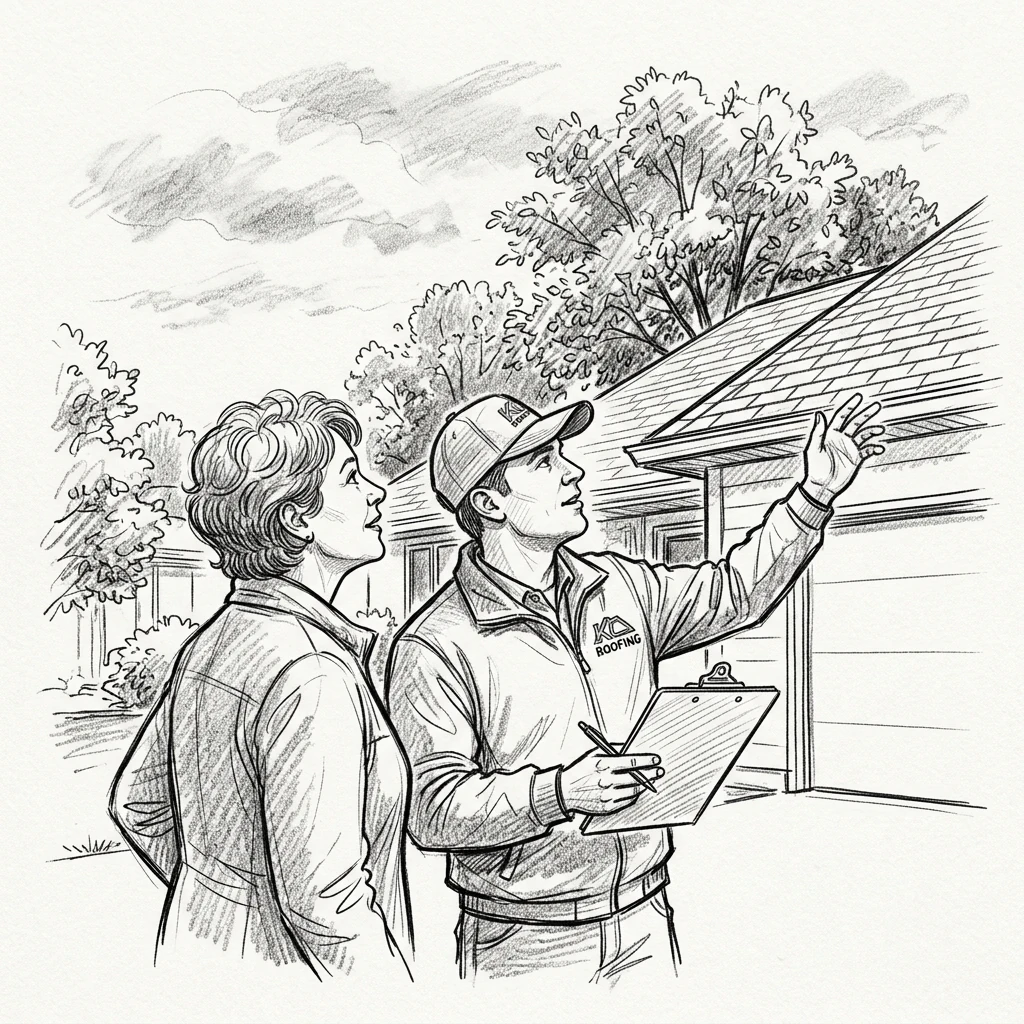
Why Contractor Choice Matters in Kansas City
Kansas City roofs take a hard mix of hail, wind, heat, ice, and heavy rain. A contractor who understands that local weather pattern will inspect more than the visible shingles. They should look at gutters, flashing, ventilation, pipe boots, soft metals, attic warning signs, and whether the full roof system is still performing.
Local presence matters too. If a leak appears six months after installation, you need a company that is still here, answers the phone, and stands behind its workmanship. Maverick Exteriors has served Kansas City homeowners since 1992 and has completed or restored more than 2,500 roofs. That kind of local track record is one of the easiest ways to separate a steady contractor from a temporary storm crew.
If you are still deciding whether you need an inspection or a replacement conversation, start with a professional roof inspection before comparing bids.
The 12 Questions to Ask Before You Sign
Use these questions with every contractor you interview. The point is not to interrogate someone. The point is to make the contractor explain the work clearly enough that you can compare one bid against another.
| Question | What a solid answer should include |
|---|---|
| Are you licensed for my city or municipality? | A clear answer about local requirements, permits, and where the company is authorized to work. |
| Can I see proof of liability insurance and workers’ comp? | Current certificates, not verbal reassurance. |
| What is your local business address? | A real Kansas City-area presence and a way to reach the company after the job. |
| Will you provide a written, itemized estimate? | Line items for materials, labor, decking rules, flashing, ventilation, cleanup, and payment terms. |
| Do you photo-document the inspection? | Photos of observed damage, roof conditions, penetrations, gutters, and relevant interior or attic signs. |
| What warranties do you offer? | Separate explanations for manufacturer material warranty and contractor workmanship warranty. |
| What is your production timeline? | A realistic schedule for materials, crew assignment, installation, inspection, and weather delays. |
| How do you handle change orders? | Written approval before added work, especially for hidden decking or code-related scope changes. |
| What does cleanup include? | Magnet sweep, debris removal, gutter cleanup where applicable, and final walkaround. |
| How do you handle insurance documentation? | Construction photos, itemized scope notes, adjuster meeting support when appropriate, and no coverage promises. |
| Can you provide local references or reviews? | Recent Kansas City-area reviews, project examples, or homeowner references. |
| Do you use subcontractors or in-house crews? | A clear explanation of who supervises the work and who is accountable for quality. |
If a contractor gets irritated by basic questions, that is useful information. A roof replacement is too expensive to run on vague promises.
Documents to Request Before Work Starts
Ask for the paperwork before you sign, not after the deposit is paid. At minimum, you should have a written proposal, proof of insurance, warranty terms, payment schedule, material selection, and a clear explanation of what is included.
A professional roof estimate should make the scope easy to compare. It should identify shingle type, underlayment, starter, ridge cap, pipe boots, flashing assumptions, ventilation, decking replacement rules, disposal, and cleanup. If your estimate is only a single price with almost no detail, use our guide on what is included in a professional roof estimate before moving forward.
For larger projects, make sure you understand:
- Deposit amount and when progress payments are due
- Who pulls permits where required
- What happens if damaged decking is found
- Whether gutters, siding, or windows are included or excluded
- How final walkthrough and punch-list items are handled
- Whether the workmanship warranty is transferable
The better the written scope, the fewer arguments you have later.

What a Real Roof Inspection Should Include
A roof inspection should produce more than a quick opinion from the driveway. A good inspector should explain what they saw, what they did not inspect, what needs urgent attention, and what can wait.
On a typical Kansas City roofing inspection, Maverick looks for:
- Hail bruising, granule loss, lifted shingles, and wind creases
- Damaged vents, pipe boots, flashing, valleys, and ridge materials
- Gutter, downspout, siding, fascia, and window-screen damage
- Attic or interior signs when water intrusion is suspected
- Ventilation concerns that could shorten the life of the next roof
- Photos that connect the observed condition to the recommended construction scope
That last piece is important. Photos help homeowners understand the condition of the roof, and they create a useful record if the job involves storm damage or an insurance claim.
Insurance-Related Work: What a Roofer Can and Cannot Do
After a storm, a contractor can inspect the roof, document observed damage, explain the construction scope, provide a written estimate, meet the adjuster when appropriate, and complete approved work. That is the contractor lane.
A contractor should not promise that your claim will be approved, decide coverage, interpret your policy as legal advice, negotiate a settlement, or offer to waive your deductible. Those are red flags. If your project involves a claim, read our roof insurance claim help guide and keep the process documentation-driven.
Maverick keeps that boundary clear. We provide construction documentation and explain the roof system. Your insurance carrier makes coverage decisions.
Red Flags That Should Slow You Down
Some warning signs are obvious. Others sound helpful until you know what they mean.
Be cautious if a contractor:
- Pressures you to sign the same day
- Says the price is only valid while they are in the neighborhood
- Offers to cover, waive, or hide your deductible
- Will not provide insurance certificates
- Refuses to put the scope in writing
- Uses only a P.O. box or out-of-state address
- Cannot explain their workmanship warranty
- Wants full payment before materials or work begin
- Discourages you from getting a second opinion
- Promises insurance approval before the carrier reviews the claim
High-pressure sales tactics are common after large storms. Slow down, verify the company, and use the Maverick homeowner bill of rights as a gut check for what a fair process should feel like.
Why Maverick Is a Steady Local Choice
Maverick Exteriors is a local, family-run Kansas City exterior contractor, not a temporary storm operation. Since 1992, the company has completed or restored more than 2,500 roofs and built a reputation around documented inspections, clear scopes, local crews, responsive communication, and a lifetime workmanship warranty.
Homeowners also get practical roofing-system guidance, not just a sales pitch. Maverick is certified with major manufacturers including GAF and IKO, and the team can explain material options for hail resistance, ventilation, curb appeal, and long-term warranty fit. If replacement is the right move, start with our roof replacement service. If the condition is uncertain, schedule the inspection first.
You can also review recent homeowner feedback on the reviews page before deciding.
Frequently Asked Questions
How many roofing estimates should I get in Kansas City?
Two or three estimates are usually enough if each one is detailed. The goal is not to chase the lowest price. Compare scope, materials, decking rules, flashing, ventilation, warranty, cleanup, communication, and whether each contractor is local and insured.
Should I choose the lowest roofing bid?
Not automatically. A low bid may leave out decking, flashing, ventilation, disposal, warranty coverage, or cleanup. Ask the contractor to explain exactly what is included and what would cost extra. A cheaper bid that misses important scope can become more expensive once work starts.
What proof of insurance should a roofing contractor provide?
Ask for current general liability and workers’ compensation certificates. The certificate should name the company you are hiring and show active coverage dates. If a contractor cannot provide proof, do not let work start on your property.
Can a roofer meet my insurance adjuster?
Yes, a roofer can meet an adjuster to point out observed roof conditions and explain construction scope. The contractor should stay in the construction lane: inspect, document, explain, and complete approved work. They should not promise coverage or negotiate a claim settlement for you.
What should a roofing workmanship warranty cover?
A workmanship warranty covers installation-related issues from the contractor. It is different from the manufacturer material warranty. Ask how long it lasts, what is excluded, who handles warranty calls, and whether it transfers if you sell the home.
How quickly should I schedule an inspection after hail or wind?
Schedule an inspection as soon as you see missing shingles, dents, leaks, granule buildup, or other storm signs. You do not need to climb on the roof. Take ground-level photos, protect active leaks, and let a trained inspector document the roof safely.
The Simple Rule
Hire the contractor who can explain the roof, document the scope, put the details in writing, and stay accountable after the job. That is more important than a fast signature or a vague discount.
Maverick Exteriors has been doing that work in Kansas City since 1992. If you want a documented inspection before deciding, schedule an inspection and get a clear scope before you sign anything.