If hail, wind, or heavy rain just moved through Kansas City, do not start by climbing on the roof. Start with a safe checklist from the ground, then inspect the attic and interior for signs of water intrusion.
The goal is simple: document what you can see, avoid dangerous roof access, and know when a professional roof inspection is worth scheduling. A good checklist also helps you explain what happened if you need to talk with your insurance carrier.
Quick Answer
After a Kansas City storm, walk around your home and check for missing or lifted shingles, dented gutters, loose flashing, granules near downspouts, cracked siding, window damage, attic moisture, and ceiling stains. Take photos with dates and notes. Do not climb on a steep, wet, damaged, or unsafe roof. If anything looks damaged or unclear, schedule a professional roof inspection.
What to Check First From the Ground
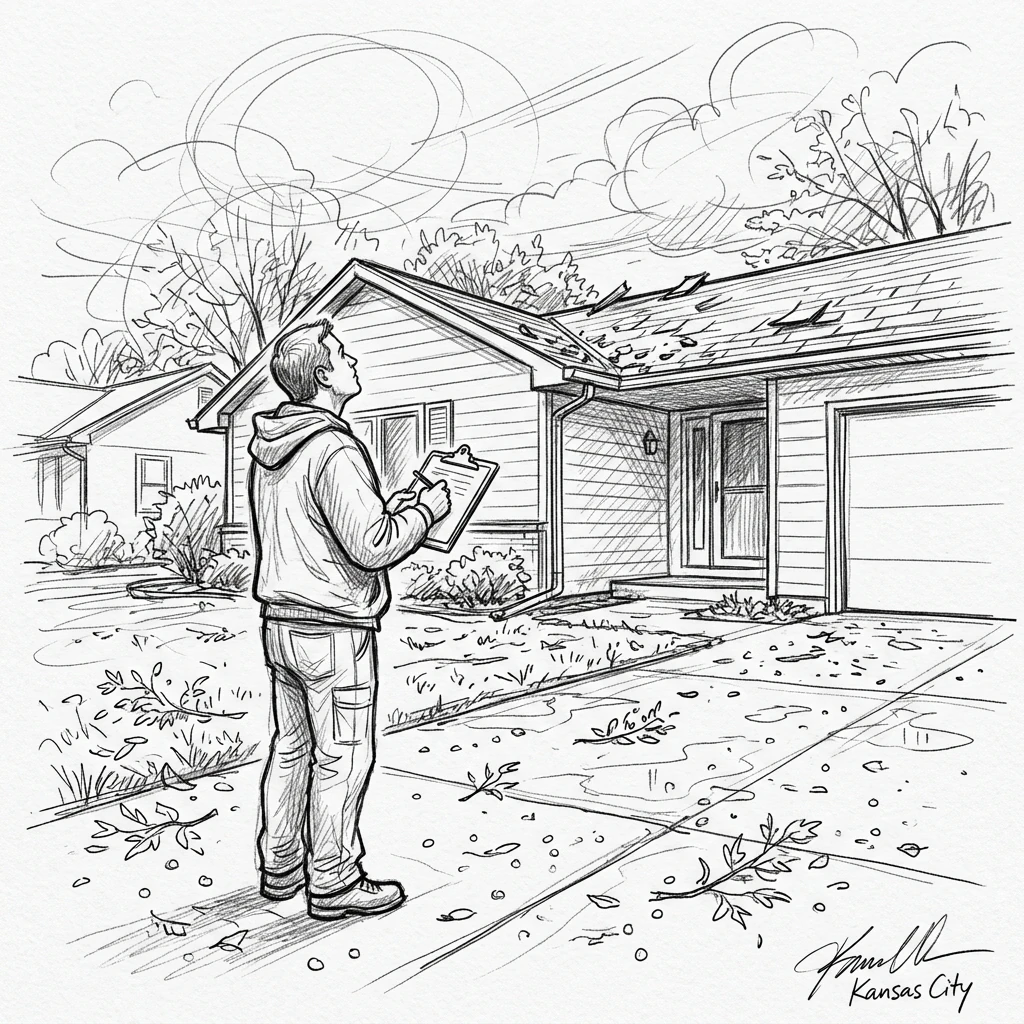
Walk the full perimeter of the house. Stand far enough back that you can see each roof slope, then use your phone zoom or binoculars if needed.
Look for:
- Missing shingles
- Shingles that look lifted, curled, or out of line
- Dark patches where granules may be missing
- Debris stuck in valleys
- Loose ridge caps
- Bent or displaced vents
- Flashing that appears lifted around walls, chimneys, or roof edges
You will not see everything from the ground, and that is fine. The point is to catch obvious warning signs without putting yourself at risk.
Gutters, Downspouts, Siding, and Windows
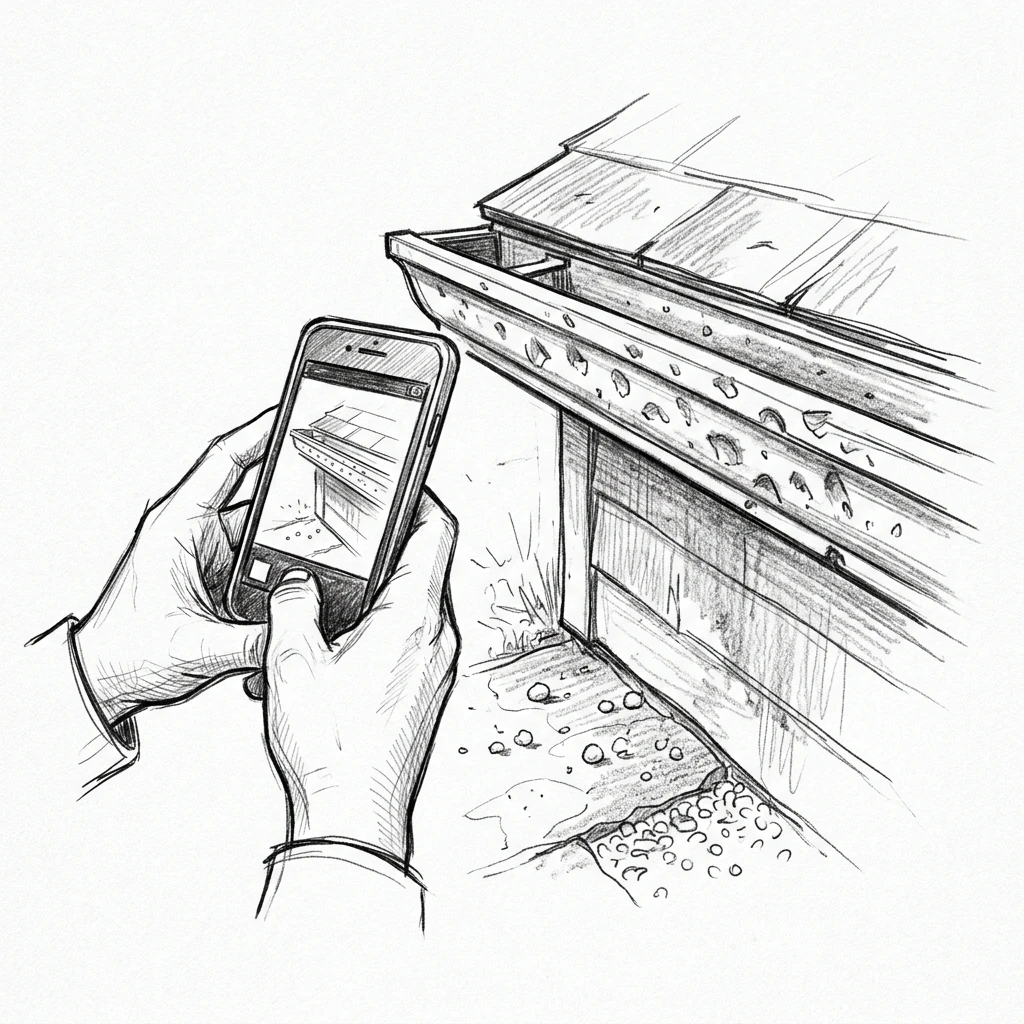
Storm damage often shows up on the roof-adjacent parts of the house first. Gutters, downspouts, screens, siding, trim, and window frames can all show impact or wind damage.
Check for:
- Dents along gutter faces or downspouts
- Gutters pulling away from the fascia
- Granules collecting near downspout exits
- Cracked siding or chipped paint
- Torn screens
- Damaged window trim or caulk
- Debris pushed into roof valleys or against siding
Take wide photos first, then close-up photos. A wide photo shows where the damage is on the house; a close-up shows the detail.
Attic and Interior Warning Signs
If it is safe to access your attic, check it during daylight with a flashlight. You are looking for signs that water got past the roof system.
Watch for:
- Damp insulation
- Dark stains on roof decking
- Musty smells
- Daylight showing through roof boards
- Water stains on ceilings
- Bubbling paint
- Discoloration around vents, lights, or ceiling corners
Interior signs matter because roof damage is not always obvious outside. Small leaks can travel along framing before showing up inside a room.
Kansas City Storm Roof Inspection Checklist
Use this table during your walkthrough.
| Area | What to look for | What to do next |
|---|---|---|
| Roof slopes | Missing, lifted, curled, or dark shingles | Photograph from the ground and mark the side of the house |
| Ridge and valleys | Debris, gaps, loose caps, or uneven lines | Note the area and avoid climbing up to clear it |
| Flashing and vents | Lifted metal, cracked boots, bent vents | Schedule a closer inspection if anything looks moved |
| Gutters | Dents, pulling, leaks, or granules | Photograph each affected run |
| Downspouts | Clogs, loose sections, granule piles | Check where water drains away from the foundation |
| Siding and windows | Cracks, dents, damaged screens, broken caulk | Document with wide and close-up photos |
| Attic | Moisture, stains, daylight, musty smell | Call for inspection if moisture is present |
| Ceilings | Stains, bubbling paint, active dripping | Protect belongings and call for help quickly |
When Not to DIY the Inspection
Do not climb onto the roof if it is wet, steep, storm-damaged, covered with debris, or difficult to access. Do not climb if you are unsure about ladder placement, roof pitch, decking condition, or nearby power lines.
Ground-level photos and attic observations are enough to decide whether the roof needs professional eyes. The roof itself can wait for someone with the right equipment and fall protection.
When to Schedule a Professional Roof Inspection
Schedule an inspection when:
- You see missing, lifted, or damaged shingles
- Gutters or soft metals show hail dents
- Granules are collecting near downspouts
- You find ceiling stains or attic moisture
- Neighbors nearby had confirmed storm damage
- You are unsure whether what you see is normal wear or storm damage
- You need photo documentation before deciding whether to file a claim
Maverick Exteriors has served Kansas City homeowners since 1992. Our roof inspections focus on clear documentation, practical recommendations, and plain-English scope explanations. We can inspect and document observed damage, explain the construction scope, meet adjusters when appropriate, and provide construction documentation.
We do not decide coverage, negotiate claims, guarantee approval, waive deductibles, or give legal or public-adjusting advice. The insurance company decides coverage. Our job is to help you understand the roof work.
How to Organize Your Photos
Create one folder on your phone or computer for the storm. Save:
- Photos of each side of the house
- Close-up photos of suspected damage
- Attic and ceiling photos
- Notes about the storm date and time
- Photos of hail, fallen branches, or debris if you have them
- Any temporary leak-prevention receipts
That simple record helps you explain what happened and gives your roofer a better starting point.
What a Professional Inspection Should Include
A professional inspection should give you more than a verbal opinion. Ask for clear photos and an explanation of what each finding means.
A useful inspection may include:
- Roof slope photos
- Shingle condition notes
- Flashing, vent, pipe boot, and ridge cap review
- Gutter and downspout observations
- Attic or interior leak notes when relevant
- Repair vs. replacement guidance
- A written estimate or next-step recommendation
If the roof needs work, the estimate should be specific enough that you understand what is being repaired or replaced.
FAQs
Should I inspect my roof after every Kansas City storm?
You do not need a full professional inspection after every rainstorm. A quick ground-level check is smart after hail, strong wind, falling branches, or heavy rain that causes leaks nearby.
Can I climb on my roof to check for hail damage?
It is safer not to. Hail and wind can make a roof slippery or unstable, and some damage is hard to interpret without training. Use ground photos and attic checks first, then call a professional if anything looks off.
What if I only see gutter dents but no roof damage?
Gutter dents can be a sign that hail hit the property hard enough to justify a closer look. Take photos and schedule an inspection if the storm was severe or if nearby homes had roof damage.
Do I need an inspection before calling insurance?
Not always, especially if there is active leaking or major visible damage. But when the damage is unclear, an inspection can help you understand whether there is enough roof evidence to justify opening a claim.
How fast should I schedule an inspection after hail or wind?
If you see active leaking, missing shingles, or obvious damage, schedule quickly. If the signs are less urgent, try to get an inspection within the first few days so documentation is fresh.
Get a Clear Next Step
A storm checklist helps you stay calm and organized. Start from the ground, document what you can see, check the attic and ceilings, and avoid unsafe roof access.
If your checklist turns up damage or uncertainty, contact Maverick Exteriors for a photo-documented roof inspection and a clear explanation of the next step.