A hail storm does not have to punch a hole through the roof to cause real damage. In Kansas City, the early warning signs are often scattered granules, bruised shingles, dented vents, lifted tabs, and small attic or ceiling stains that show up after the next rain. The smartest move is to document what you can see safely, stop active water intrusion, and schedule a roof inspection before small damage turns into a bigger repair.
Quick Answer
After a hail storm, the main roofing red flags are granules in gutters, dark hail bruises on shingles, dented vents or gutters, lifted or missing shingles, exposed underlayment, new ceiling stains, damp attic insulation, and any contractor promising insurance approval or deductible savings. Photograph visible damage from the ground, keep receipts for temporary leak protection, and get a photo-documented inspection.
What Should You Check First After Hail?
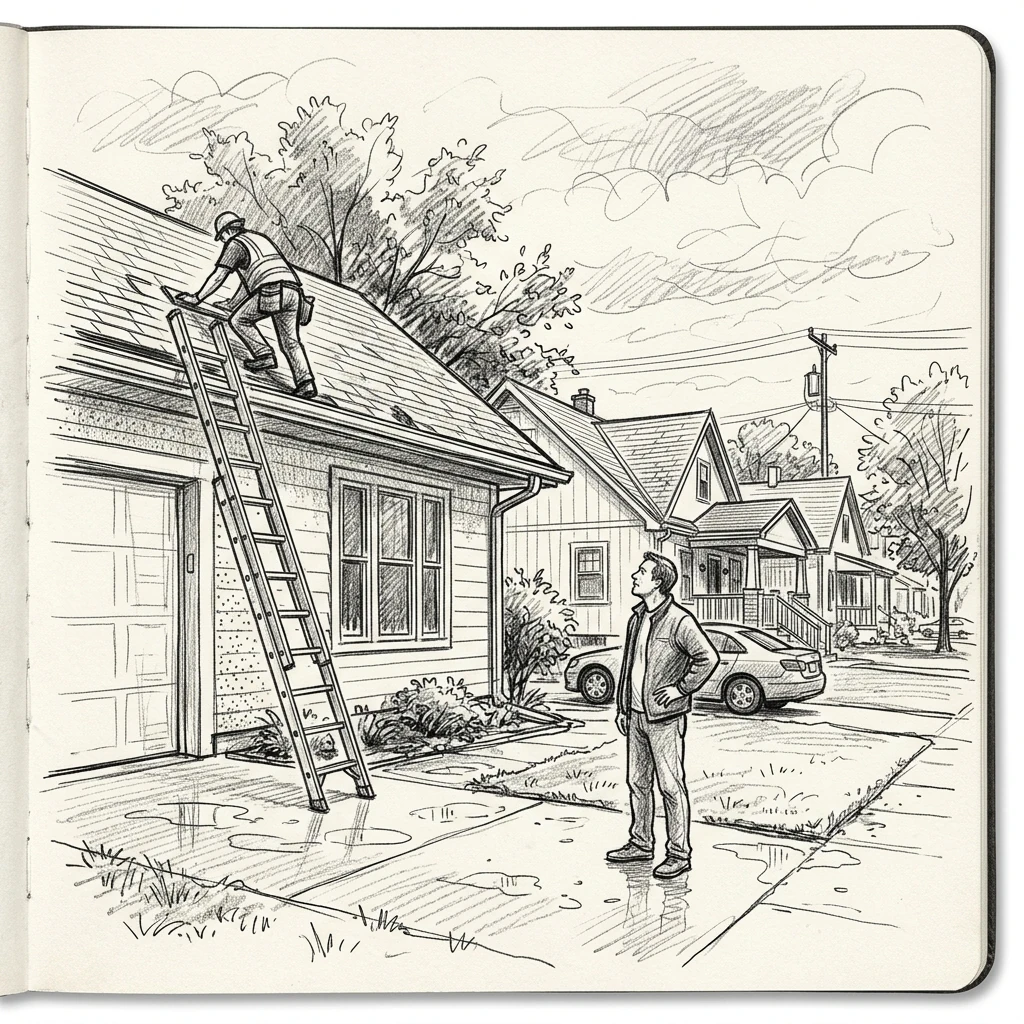
Start from the ground. Do not climb a wet or storm-damaged roof just to prove a point to yourself. Gravity remains undefeated.
Walk the property and look for signs that hail hit more than the lawn furniture:
- Shingle granules collected in gutters, downspouts, or splash blocks
- Dents on gutters, downspouts, metal vents, flashing, window wraps, or garage doors
- Shingle pieces, ridge cap fragments, or roofing nails in the yard
- Bent or damaged gutter guards
- Fresh marks on siding, screens, painted trim, or soft metals
- Water stains near ceilings, skylights, bath fans, chimneys, or exterior walls
Those clues do not prove the full roof needs replacement. They do tell you the roof deserves a closer look from someone who can inspect the whole system, not just one slope.
If you want a broader safe checklist, use our roof inspection checklist for Kansas City homeowners before you call contractors.
Which Shingle Red Flags Matter Most?
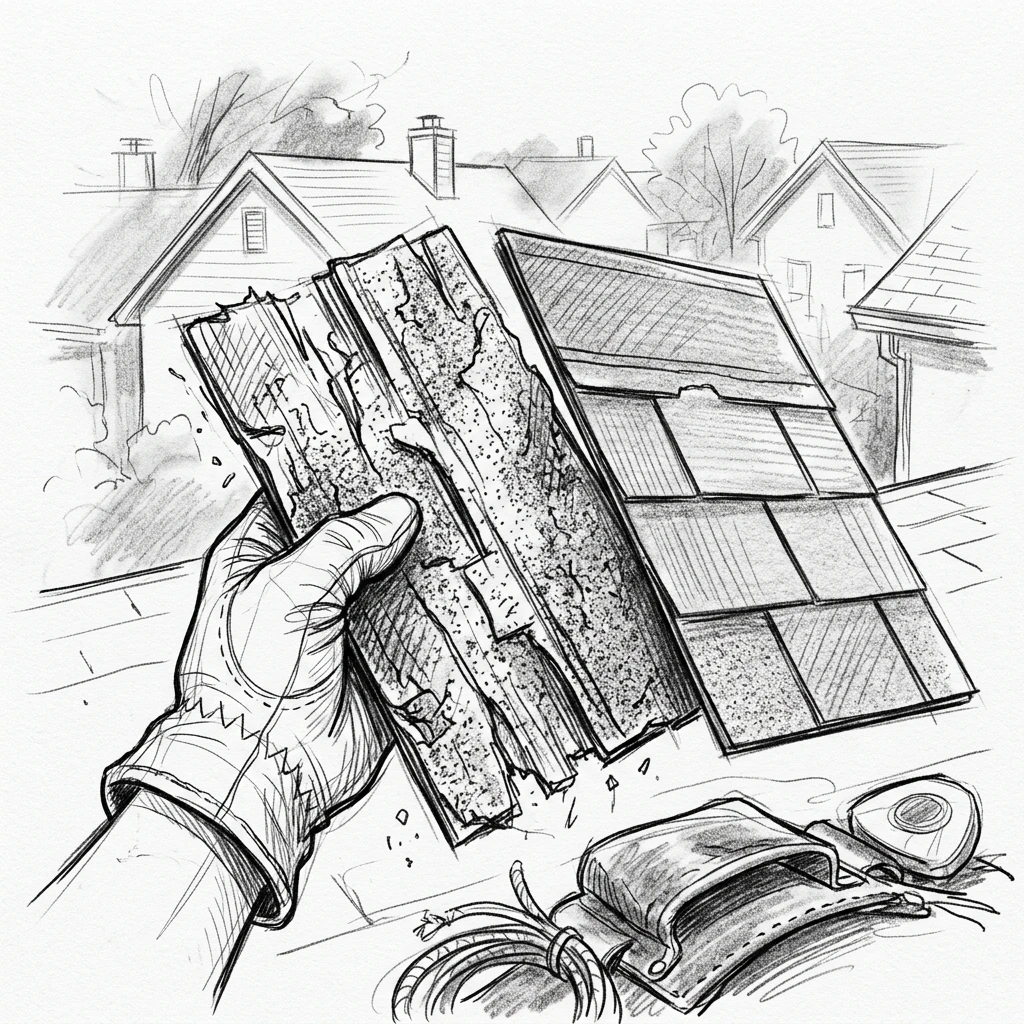
Hail damage to asphalt shingles usually shows up as bruising, granule loss, cracks, or impact marks. The problem is that some marks look harmless from the driveway but still shorten the life of the shingle.
Granule Loss and Dark Bruises
Granules protect asphalt shingles from UV exposure. Hail can knock those granules loose and leave darker spots where the asphalt mat is more exposed. A few loose granules after normal aging is not panic material. Fresh piles after a storm, especially when paired with dented gutters or soft metals, are a red flag.
A good inspector should photograph both close-up marks and wide shots so the pattern is clear. Random wear is different from storm damage spread across multiple slopes.
Lifted, Creased, or Missing Shingles
Wind often rides in with hail. Check roof edges, ridges, valleys, and corners for lifted tabs, missing shingles, or creases where shingles bent backward. A lifted tab can let wind-driven rain under the shingle field even when the roof still looks mostly intact.
If shingles are missing and underlayment is exposed, treat it as urgent. Temporary protection may be needed until a repair or replacement scope is approved.
What Interior Leak Signs Should Worry You?
Interior signs usually mean water already found a path inside. That does not automatically mean the roof is ruined, but it does mean waiting is a bad plan.
Check the attic with a flashlight if it is safe to access. Look for damp insulation, dark decking stains, light coming through roof boards, wet rafters, rusted nails, or musty odor. Inside living areas, look around ceiling corners, bath fans, skylights, fireplaces, and upper-floor walls.
Water stains can lag behind the storm. You might notice them days or weeks later after the next heavy rain. Photograph the stain with the date, then photograph it again if it grows. That creates a timeline your roofer and insurance carrier can understand.
For active leaks, put a bucket under the drip, move valuables, and prevent further water damage where safely possible. Keep receipts for tarps, emergency materials, or temporary repairs.
What Contractor Red Flags Show Up After Storms?
Storms bring good roofers, overwhelmed roofers, and the traveling circus. The traveling circus is the part to avoid.
Be careful if a contractor:
- Pressures you to sign on the first visit
- Says they can guarantee insurance approval
- Offers to waive, absorb, or hide your deductible
- Refuses to provide license, insurance, or workers’ comp documentation
- Gives only a lump-sum price with no written scope
- Pushes you to file a claim before any real inspection
- Has no Kansas City-area office, references, or warranty process
- Uses scare tactics instead of photos and plain explanations
A legitimate roofing contractor can explain observed damage, show photos, write a construction scope, and meet the adjuster when appropriate. They should not promise coverage, decide what your policy owes, or act like a public adjuster.
If you are comparing companies, read how to choose a roofing contractor in Kansas City before signing anything.
When Should You File an Insurance Claim?
File a claim when you have a reasonable basis to believe storm damage affected the roof or exterior system. That basis can come from visible damage, interior leaks, neighborhood hail reports, or a professional inspection.
The clean sequence is:
- Photograph what you can see safely.
- Prevent further damage if there is an active leak.
- Schedule a roof inspection.
- Review the photos and written construction findings.
- Contact your insurance carrier if the damage appears claim-worthy.
- Share construction documentation with the carrier and adjuster.
Maverick can inspect the roof, document observed damage, explain construction scope, and meet with the adjuster when appropriate. The carrier still decides coverage under the policy. That distinction matters, and any contractor who blurs it is waving a red flag with both hands.
For more detail on the claim sequence, see our roof insurance claim help guide for Kansas City.
Repair or Replacement: Which Red Flags Change the Decision?
A few damaged shingles on a newer roof may only need repair. Widespread hail bruising across several slopes, severe granule loss, brittle shingles, damaged ridge caps, or leaks tied to multiple roof areas can point toward replacement.
Age matters too. Repairing isolated damage on a 7-year-old roof is different from patching a 22-year-old roof after a major storm. Older shingles are harder to match, more brittle, and more likely to fail in nearby areas after the repair.
A written scope should separate what is known from what is still unknown. For example: visible shingle damage, flashing condition, gutter damage, decking concerns, ventilation issues, and any code-required items that may apply once work begins.
If you are trying to understand what should be listed in a scope, use our guide on what is included in a professional roof estimate.
Why Documentation Is the Difference Between Calm and Chaos
After a storm, memory gets fuzzy fast. Photos do not.
Good documentation should include:
- Date of storm and date damage was noticed
- Exterior photos from safe ground-level angles
- Close-ups of gutters, vents, flashing, siding, and visible shingle issues
- Attic or interior leak photos
- Temporary repair receipts
- Contractor inspection photos
- Written construction scope with materials and line items
That documentation helps everyone work from the same facts: homeowner, roofer, adjuster, mortgage company, and production crew. It also reduces the odds of missing small items that matter later, like pipe boots, ridge cap, flashing, or damaged soft metals.
Maverick Exteriors has served Kansas City since 1992 and has completed or restored more than 2,500 roofs. Our role is straightforward: inspect the roof, document observed damage, explain what the construction scope requires, and perform approved work correctly.
FAQs About Roofing Red Flags After Hail
How soon should I inspect my roof after a hail storm?
Do a safe ground-level check as soon as the storm passes and schedule a professional inspection within a few days if you see damage signs. If there is an active leak, address temporary protection immediately and keep receipts.
Are granules in the gutter always hail damage?
No. Older shingles naturally shed some granules. Fresh piles after a hail storm, especially with dented gutters, damaged vents, or dark shingle marks, are worth inspecting because the pattern may point to storm impact.
Should I let a door-knocking roofer inspect my roof?
Only if you can verify the company first. Ask for local references, license information, liability insurance, workers’ comp, written scope practices, and warranty details. Do not sign anything because someone says your neighborhood has damage.
Can a roofer tell me whether insurance will cover my roof?
No. A roofer can document observed damage and explain the construction scope. Your insurance carrier determines coverage under your policy. Be wary of any contractor who guarantees approval or claims they can settle the claim for you.
Is a small ceiling stain after hail urgent?
Yes. A small stain can mean water already reached the interior. Photograph it, check the attic if safe, prevent further damage, and schedule an inspection. Waiting for the stain to spread usually makes the repair harder.
What is the biggest mistake homeowners make after hail?
Waiting too long. Storm damage can be hard to connect to a specific event after weeks or months pass, and small leaks can damage insulation, decking, and drywall. Document early, inspect early, and make decisions from photos and written scope, not guesswork.
Get a Photo-Documented Roof Inspection
If hail hit your Kansas City neighborhood and something feels off, do not wait for the next leak to make the decision for you. Maverick Exteriors can inspect the roof, document observed damage, explain repair or replacement scope, and help you understand the next step.
Schedule a free roof inspection or call 913-268-6052. We will give you clear photos, plain-English findings, and a written path forward.